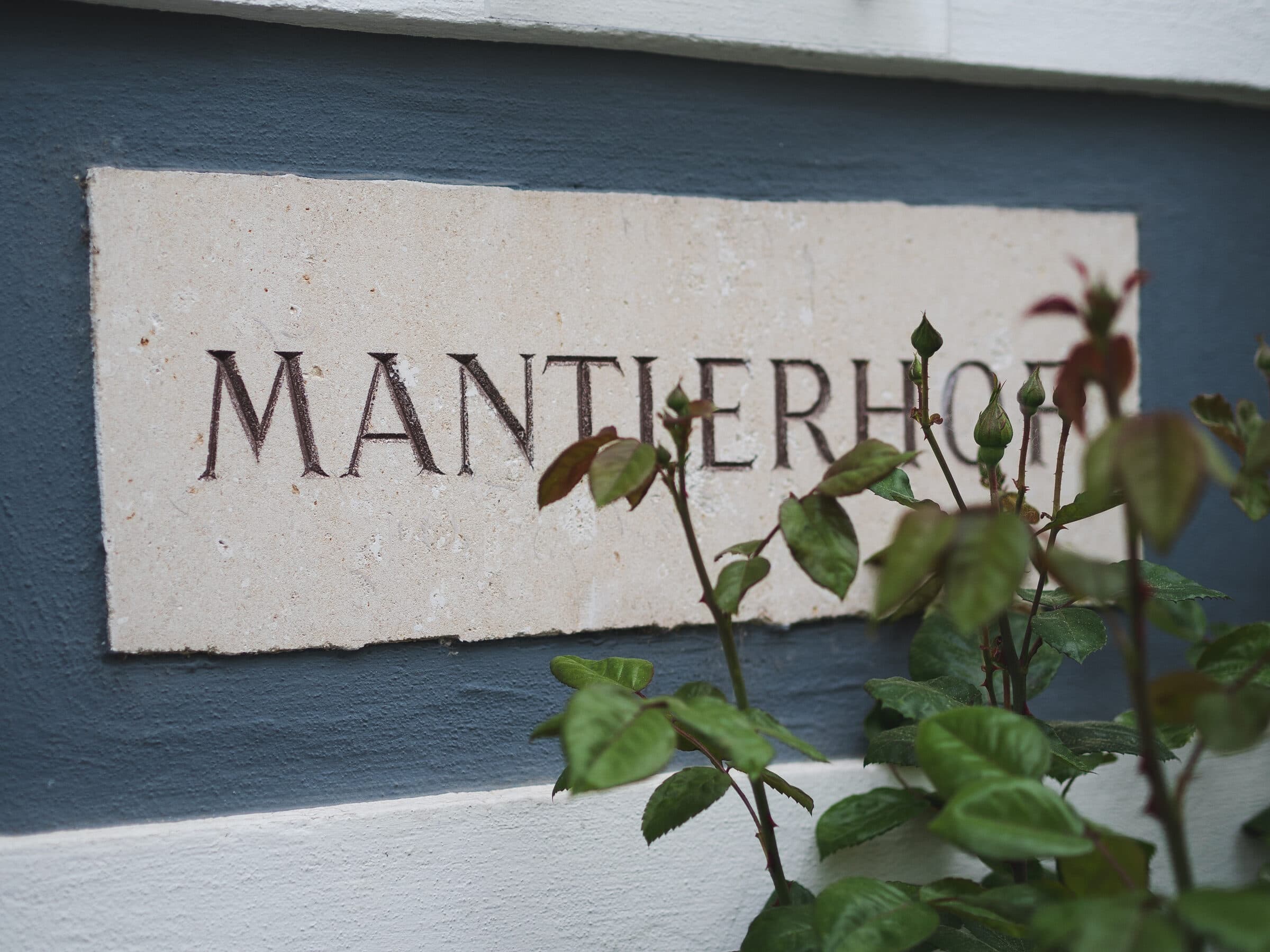
An estate between Kamp, Danube and loess
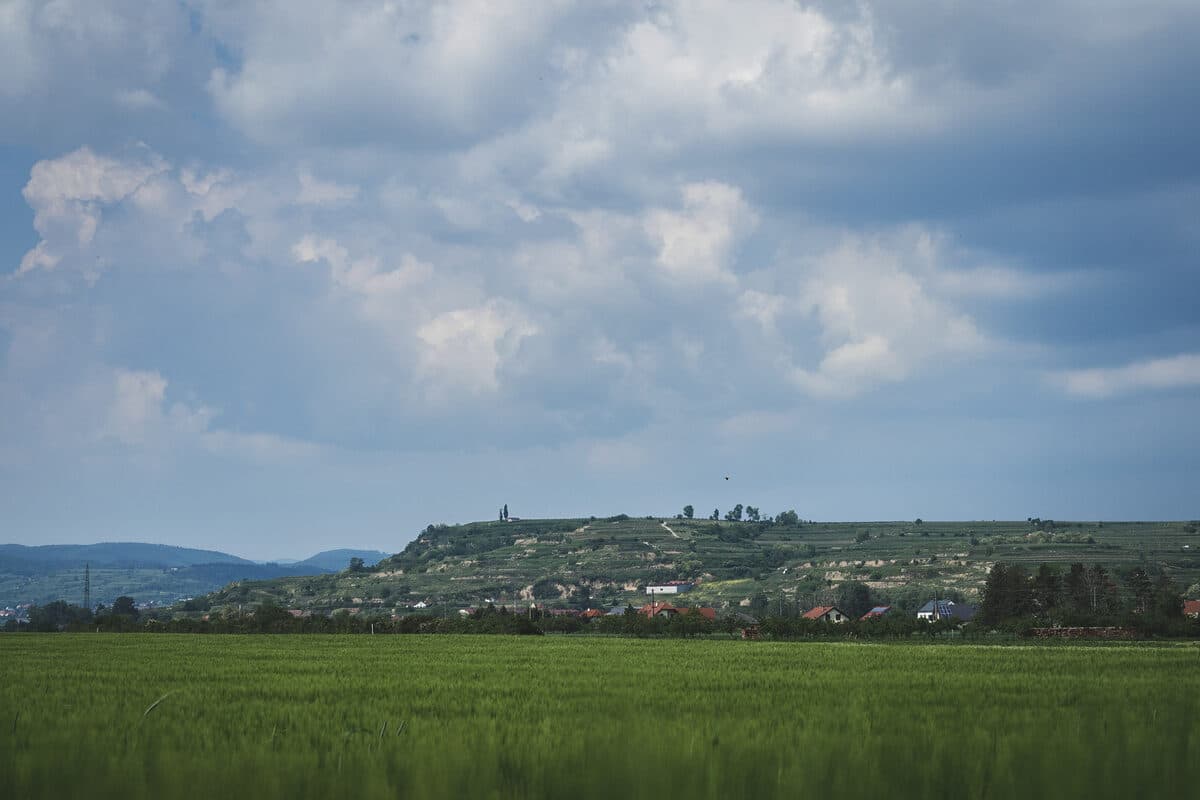
Mantlerhof lies in the municipality of Gedersdorf, close to the Kamp River shortly before it flows into the Danube. To the west are the lights of Krems; to the east, the towers of Grafenegg. Approaching the traditional winery through the centre of Brunn im Felde, a charming pond comes into view. On its western side stands an impressive courtyard with an early Neoclassical façade. This historic homestead is home to our small family winery with its long tradition. The Mantler family has farmed the estate for more than 200 years.
Mantlerhof is one of the oldest buildings in the village. Its foundations have stood for more than 800 years. Before it, the same site was occupied by a medieval seat of the Kuenringer knights. Admont Abbey in Styria later built a wine-growing estate on those foundations. The final construction phase took place during the Rococo period, whose style still shapes the façade today.
The Grafenegg estate's land register describes it as ‘a dwelling’. The entry reads: ‘… Mantler Johann Georg et Maria uxor Brunn 1815 durch Kauf pr 10000 F.- …’
Continuous care and active restoration ensure that the estate still presents its best side today. Margit Mantler-Ferstl fills the courtyard with greenery, creating an inviting place to linger, especially in spring. Whichever way you look, the view is almost always green.
Today, we craft long-lived organic wines with great finesse and body from 15 hectares of vineyards. Grüner and Roter Veltliner receive particular attention, while Riesling and Neuburger are also firmly established in our range.
Origin matters
Our wines follow the logic of the origin pyramid established by the Austrian Traditional Wineries (ÖTW). They are divided into regional wines, village wines and single-vineyard wines. With each tier, origin gains precision: from regionally shaped wines and characterful village wines to wines from clearly defined individual sites. This makes origin tangible – and perceptible in the glass.
Premier sites. Single vineyards.
Characterful single vineyards shape our wines. Some of our sites have been classified as Erste Lagen by the Austrian Traditional Wineries. Every Ried has its own profile and its own story – distinct and unmistakable in expression.
Ried Weitgasse
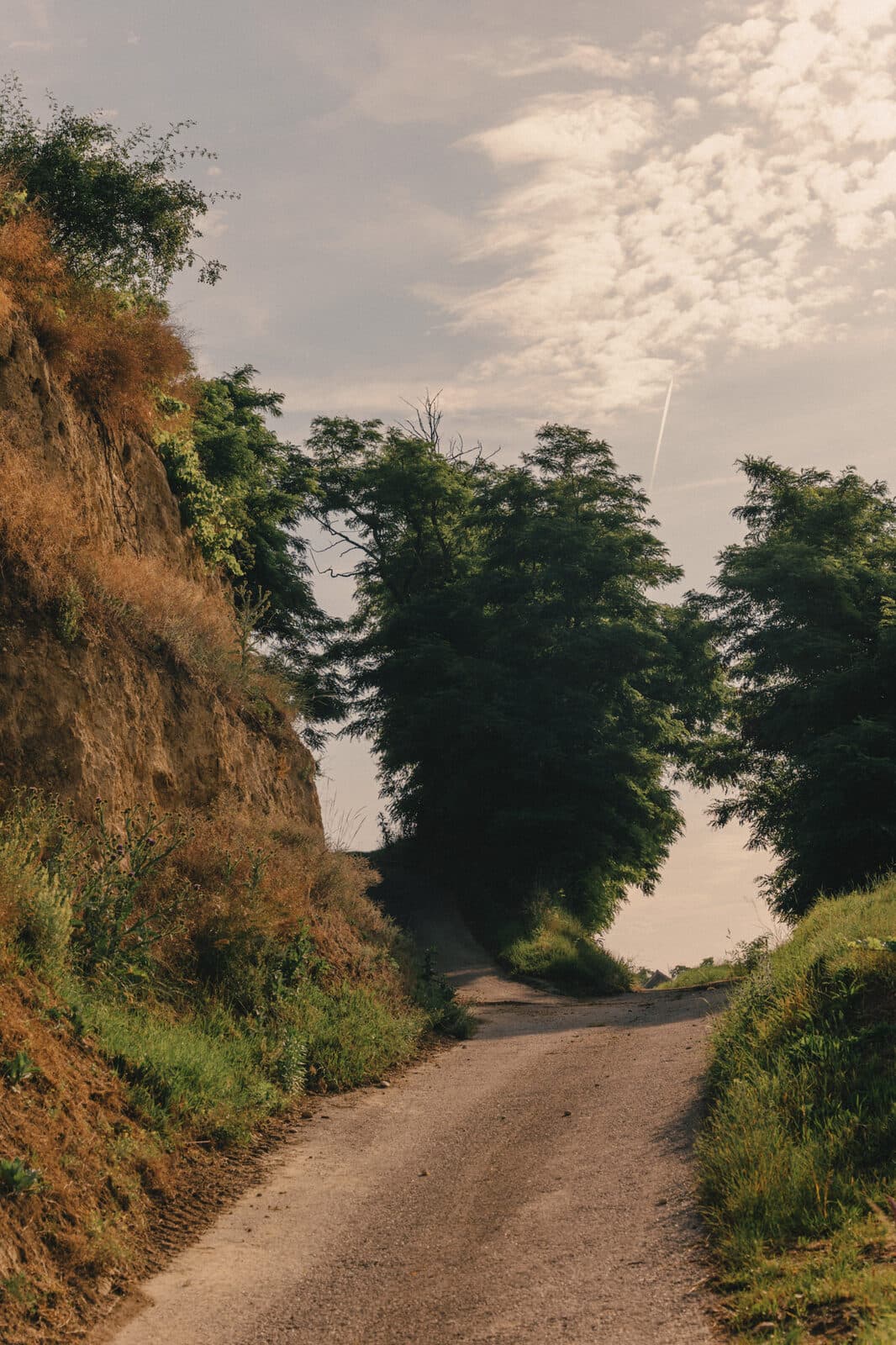
Once the village's communally used pasture, this is a windy, cool site on the high plateau of the Gobelsberg. A layer of fertile black earth lies over the loess, producing a cool, elegant style of wine. The path to the plateau opens into the hollow ways so characteristic of loess landscapes – hence the name ‘wide lane’.
To the wines from this site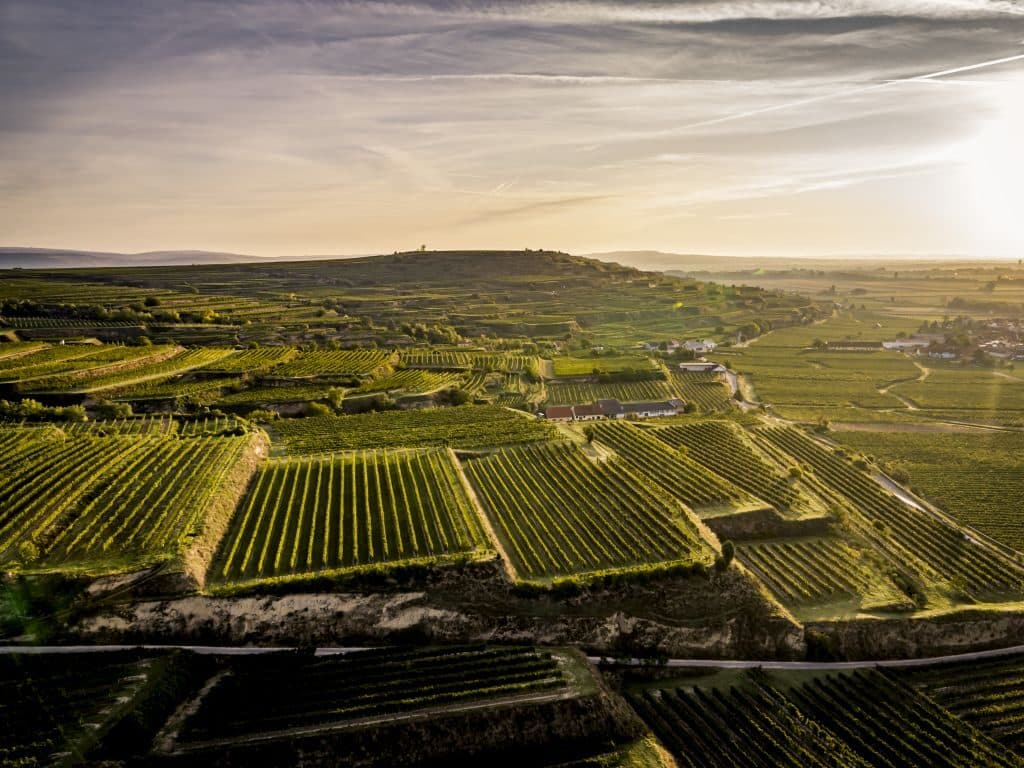
Kremstal - our origin
Mantlerhof lies on the eastern edge of the Kremstal, where Pannonian influence meets the cooler climate of the Waldviertel. The proximity to the Danube and the Kamp creates marked temperature differences that preserve freshness and tension. Powerful loess soils give the wines both fullness and elegance. In this multi-layered region grow characterful Grüner and Roter Veltliner, Rieslings and Neuburger - shaped by clarity, structure and an unmistakable signature.
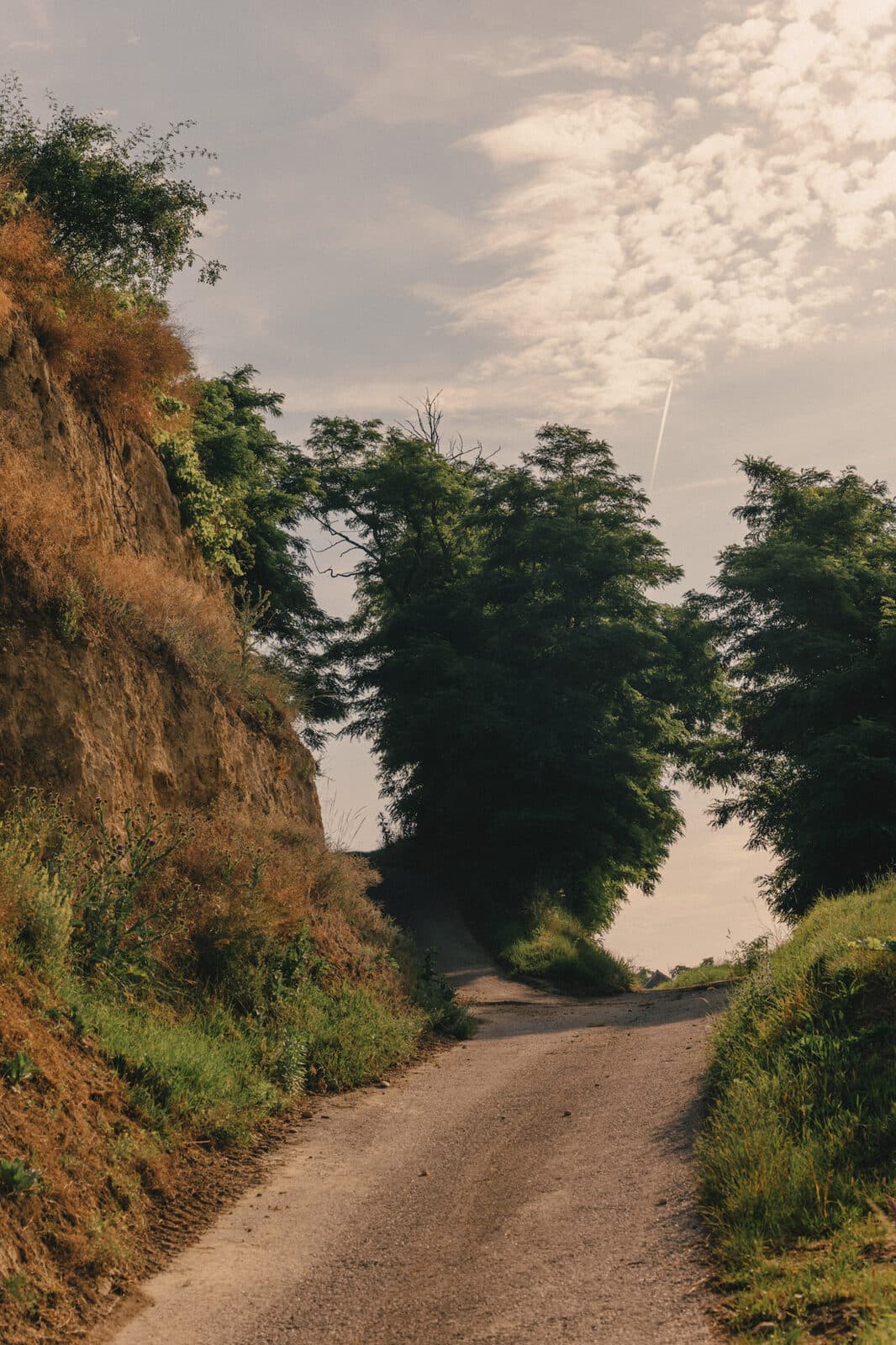
Loess as foundation
Deep layers of loess shape our vineyards. They store water, encourage deep root growth and give the wines substance and fine spice. Their lime content reaches up to 30 percent. The result is dense yet elegant wines of quiet strength and clear structure.
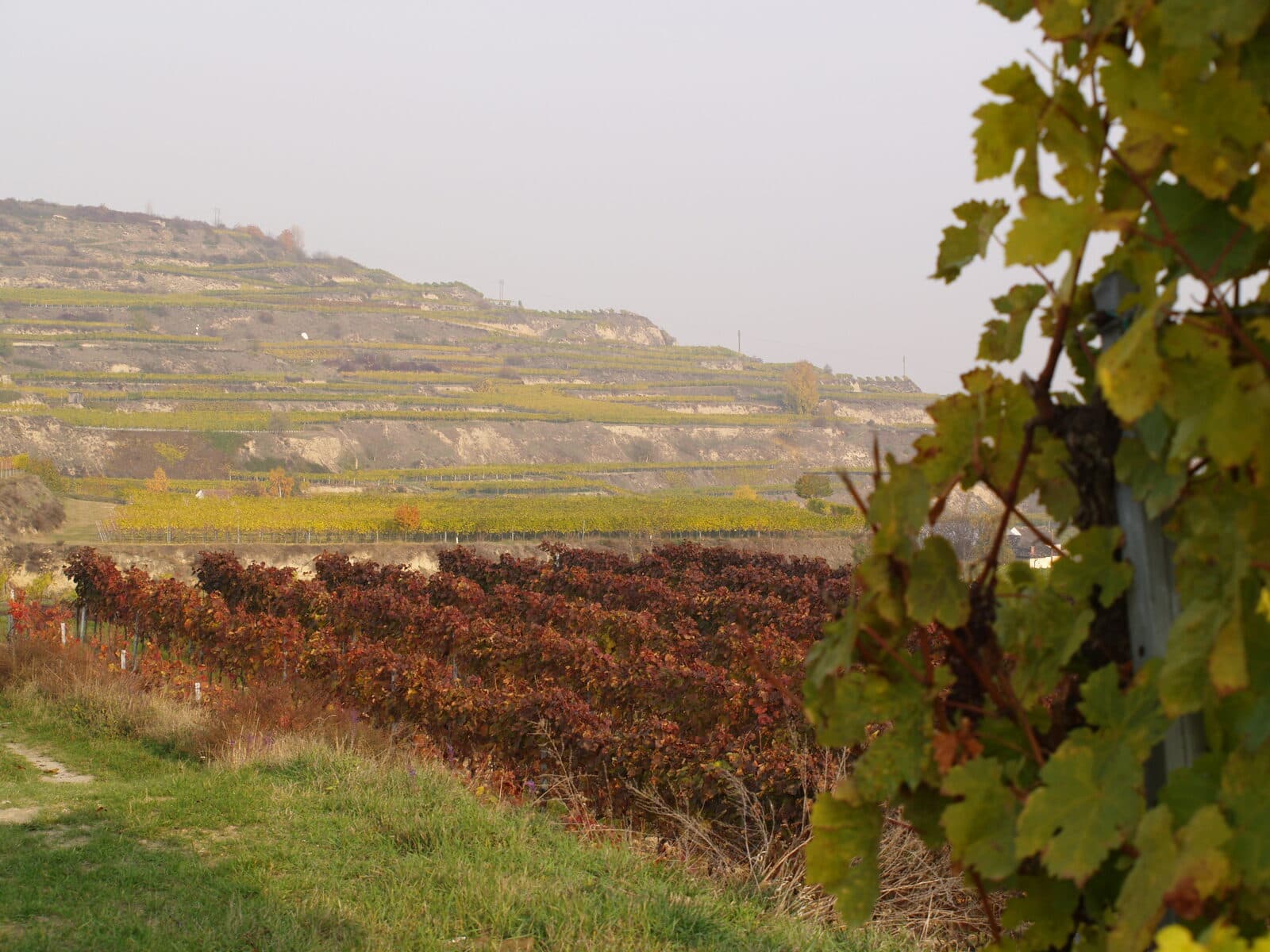
Tension through temperature
Warm Pannonian days meet cool nights from the Waldviertel. The proximity of the Danube and Kamp intensifies this contrast in temperature. It creates aroma, freshness and precision – the basis for lively, long-lived wines.
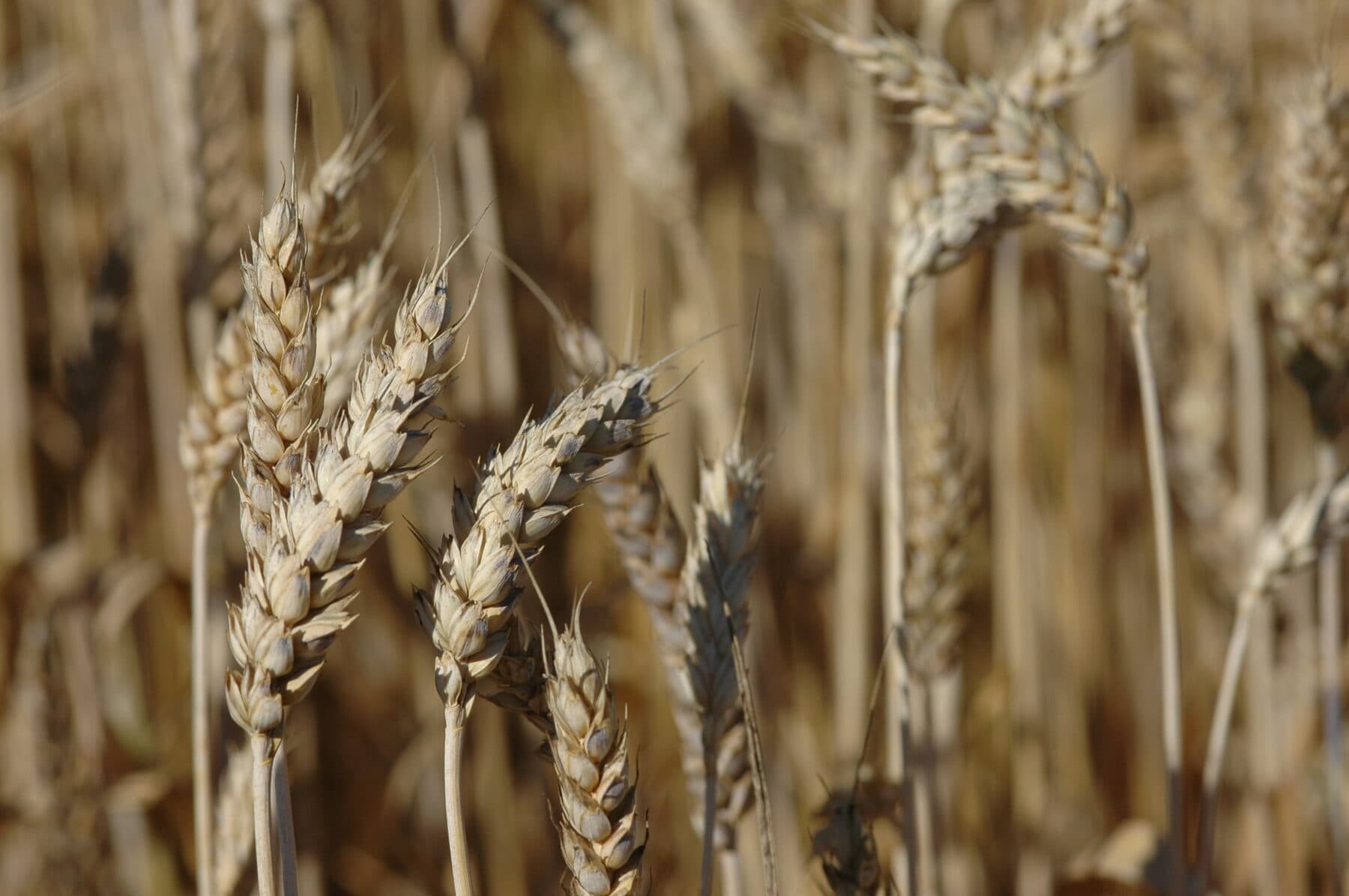
Mantlerhof has always been a mixed agricultural estate. Arable fields are as much a part of it as viticulture. We take a holistic view of farming – as a responsibility to nature and future generations.
More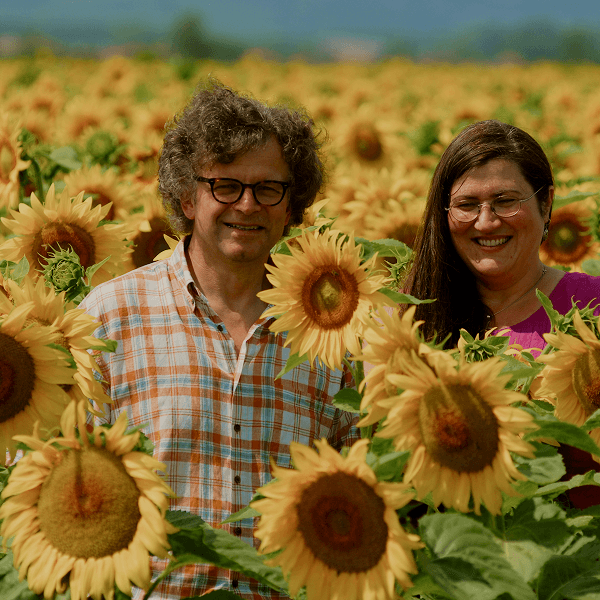
„Taking part in the growth and flourishing in the field, the vineyard and the cellar is an important part of our personal contentment. That is why we switched to organic production.“
From Krems towards the east, the valley of the Danube opens up. The landscape widens. Between the vineyard and the Danube lies the beginning of the „Tullner Feld“. Here, around the village of Brunn im Felde, Mantlerhof owns fields on the plain that are quite large by local agricultural standards.
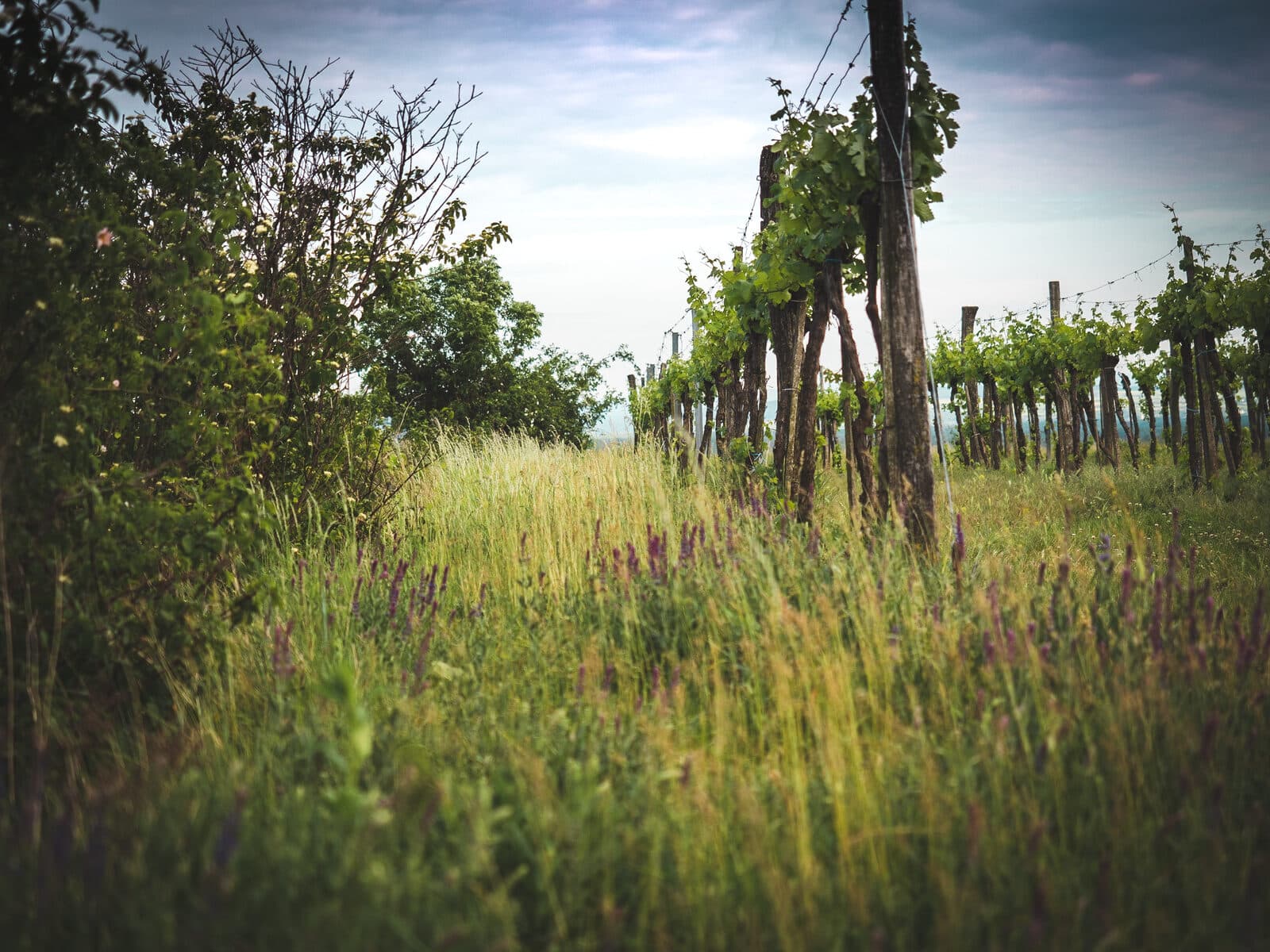
The need for crop rotation is far more visible in arable farming than in the permanent crop of wine. With wine, we put it into practice by sowing cover crops between the vine rows.
A major turning point was the year 2002. On 4 July there was massive hail over both the fields and the vineyards. In August came a flood that affected all the fields and the house. In November a violent storm damaged part of the roof. The response to this „annus horribilis“ was the switch to organic management in the fields the following year, 2003. In addition to the minimum requirements of organic farming, we planted several hedges to offer insects and animals shelter and food. Management is carried out in harmony with the breeding and reproductive cycles of the animals.
The following crops are grown in rotation:

Experience Mantlerhof
Visit us in Brunn im Felde and discover our wines where they are made. During a personal tasting at Mantlerhof we tell of origin, craft and vintage - and gladly pour another glass.